How a Criminal Defense Lawyer in Lafayette LA Challenges Evidence
When a criminal case looks strong on paper, it is often because the evidence has been presented in a neat, one-sided package. Police reports tend to read cleanly. Affidavits usually sound confident. Laboratory findings can seem final to anyone who has never had to test them under cross-examination. Yet criminal cases are rarely as tidy as they first appear. A skilled defense lawyer knows that every piece of evidence has a backstory, and that backstory often determines whether the evidence belongs in court at all.
That is especially true in Louisiana, where local practice, parish-level procedures, and the realities of policing in Acadiana all shape how cases are built. A criminal defense lawyer in Lafayette LA does not simply ask whether the prosecution has evidence. The sharper question is whether the evidence was lawfully obtained, properly preserved, accurately interpreted, and honestly presented. Those are not technical side issues. They are often the center of the case.
Evidence is not the same thing as truth
People outside the legal system sometimes use the word evidence as if it means proof. Lawyers do not. Evidence is material the state wants the judge or jury to consider. Proof is what remains after that material has been tested.
That distinction matters from the first court date. A police officer may testify that drugs were found in a car. On its face, that sounds damaging. But where in the car were they found, who actually controlled that area, did the officer have legal grounds to search, was the substance properly tested, and did the lab report match the seized item? If one answer breaks the chain, the state’s neat narrative starts to fray.
I have seen cases that looked overwhelming collapse after one simple question: how do we know this item is the same item allegedly seized at the scene? That is not courtroom theater. It is the practical work of defense. Labels fall off. Property rooms get crowded. Officers write reports at the end of long shifts. Witnesses speak with certainty about events they barely noticed in the moment. Evidence only becomes reliable after disciplined scrutiny.
The first challenge often begins before trial
Most evidence fights are not dramatic jury moments. They begin in motion practice, often weeks or months before a case is tried. A defense lawyer studies the arrest report, body camera footage, dash camera recordings, dispatch logs, warrants, photographs, lab paperwork, booking records, and witness statements. The goal is not to create confusion for its own sake. The goal is to identify where the state cut corners or overreached.
In Lafayette criminal courts, as elsewhere, some of the most important litigation happens through motions to suppress. These motions ask the judge to exclude evidence because it was obtained in violation of the Constitution or state law. If the court suppresses a confession, firearm, narcotics seizure, or identification, the prosecution can lose its strongest leverage overnight.
A good defense lawyer also looks beyond the obvious. Sometimes the issue is not the seizure itself but what happened afterward. Was a phone searched more broadly than the warrant allowed? Did officers continue questioning after a suspect invoked the right to remain silent? Did the state disclose all exculpatory material, or did important details remain buried in supplemental reports?
That is how cases are won. Not with slogans, but with close reading and pressure on the weak joints of the file.
Search and seizure problems are common, and they matter
Many criminal cases in Lafayette begin with a traffic stop, a street encounter, a probation-related search, or the execution of a warrant. Each setting raises different legal questions, and each question can become a route to exclusion.
A routine traffic stop provides a good example. Officers need a legal basis to stop a vehicle. That can be a moving violation, an equipment issue, or reasonable suspicion of criminal conduct. But the stop cannot be prolonged indefinitely while officers fish for unrelated evidence. If an officer writes the citation, resolves the traffic issue, and then keeps the driver waiting without valid grounds, the prolonged detention may taint whatever comes next.
The same is true with consent searches. Police reports often state that the driver consented. That sounds straightforward until body camera footage shows a different picture. Was the person actually free to refuse? Did the officer phrase the request as a command? Was there a show of force, multiple officers, flashing lights, or a hand already resting on a holster? Consent has to be voluntary. In practice, voluntariness is often the heart of the fight.
Warrant cases bring their own set of problems. A judge may have signed the warrant, but that does not end the analysis. The affidavit must establish probable cause. It must describe the place to be searched with enough particularity. It cannot rely on stale information or material misstatements. If the warrant allowed officers to look for a stolen handgun, that does not automatically authorize them to dig through every digital file on a phone or seize unrelated property.
These issues can sound abstract until you see the real stakes. Suppose officers enter a home based on vague information from an unnamed source and recover narcotics and cash. If the entry was unlawful, the evidence may be suppressed. Without Criminal defense lawyer Lafayette LA it, the prosecution may have no meaningful case left. That is why a criminal defense lawyer in Lafayette LA pays close attention to every step leading up to the search, not just what was found at the end.
Statements and confessions are not always voluntary
Jurors tend to give great weight to a defendant’s own words. Prosecutors know that. Police know it too. That is why interrogations are structured to obtain admissions, clarifications, or inconsistencies that can later be framed as consciousness of guilt.
But a statement is only as strong as the conditions under which it was made. Was the person in custody? Were Miranda warnings given when required? Did the suspect clearly ask for a lawyer? Was there intoxication, exhaustion, youth, fear, or mental impairment affecting the person’s ability to understand what was happening? In Louisiana courts, those details can decide whether a statement comes in or stays out.
It is not unusual for an interrogation to begin casually. An officer may say, “We just want your side,” or “Help us understand what happened.” The tone feels conversational, but the legal stakes are serious. Once a person is effectively in custody, questioning without proper warnings can create suppression issues. Even where warnings are given, a lawyer may challenge whether any waiver was truly knowing and voluntary.
False or unreliable statements are not rare in the real world. People say things under pressure that they later struggle to explain. Some try to minimize involvement and end up making damaging admissions. Others agree with officers out of fear, confusion, or the mistaken belief that cooperation guarantees release. An experienced defense attorney listens to the recording, not just the summary in the report. Tone, pacing, interruptions, promises, threats, and omitted context often matter more than the typed excerpt the prosecutor highlights.
Witness identification can be dangerously persuasive
Eyewitness testimony can move a jury in a way technical evidence sometimes cannot. A person points across the courtroom and says, “That’s the one.” The effect is powerful. It is also one of the most error-prone forms of evidence in criminal law.
A defense lawyer examines how the identification happened. Was the witness shown a proper photo lineup, or did police effectively signal who to pick? Was the suspect the only person in the lineup matching the description? How much time did the witness have to observe the event? What were the lighting conditions? Was a weapon present, drawing attention away from the face? How much time passed before the identification was made? Did the witness discuss the event with others before making a selection?
Memory is not a recording. It is reconstructive. Stress, darkness, cross-racial identification issues, intoxication, trauma, and suggestion can distort what a witness sincerely believes. That sincerity is part of the problem. A mistaken witness often sounds honest because the mistake Criminal defense lawyer Lafayette LA is real to them.
I have seen identification cases where the original description barely matched the accused, yet by the time of trial the witness had become certain. Usually, that certainty grew after repeated exposure to the suspect’s image, police reinforcement, or months of retelling the story. A capable defense lawyer exposes that progression carefully. The point is not to attack a witness for being human. The point is to show that confidence and accuracy are not the same thing.
Forensic evidence deserves skepticism, not reverence
Jurors often assume scientific evidence is immune from challenge. It is not. Breath testing machines require calibration. Drug analysis depends on proper handling and valid methodology. DNA evidence can be powerful, but transfer, contamination, partial profiles, and interpretation issues can complicate what first appears decisive.
In drug cases, one recurring issue is whether the substance tested is clearly tied to the item seized from the defendant. If the packaging changed, the weights shifted significantly, or the chain of custody has gaps, a defense lawyer can question whether the tested sample is the same sample allegedly recovered. In DWI cases, the defense may examine maintenance logs, operator certification, observation periods, and whether medical conditions or mouth alcohol affected the result.
Cell phone extraction reports also deserve close attention. A report may show a device connected to a tower, but that does not always place a person at a precise location. A message may appear on a phone, but authorship can still be disputed. Metadata can help, but it can also be misunderstood by lawyers who overstate what the technology actually proves.
The effective defense approach is rarely to reject science wholesale. Judges do not respond well to exaggerated attacks. Stronger advocacy usually looks narrower and more credible. The lawyer asks whether the methods were followed, whether the result was overinterpreted, and whether the prosecution is claiming more certainty than the evidence supports.
The chain of custody can make or break physical evidence
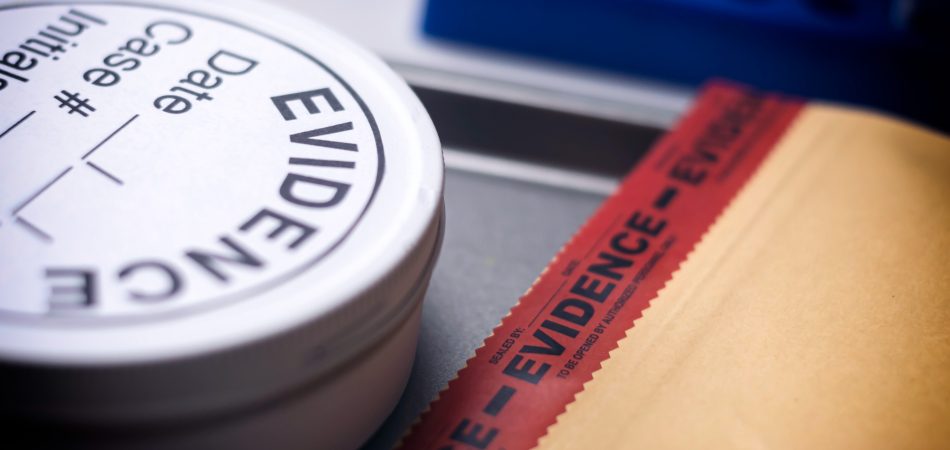
Chain of custody sounds dull until it becomes the reason the state cannot authenticate a key exhibit. Every transfer of physical evidence creates a point where mistakes can happen. The item is seized, bagged, logged, transported, stored, tested, returned, and eventually brought to court. At each step, names, dates, seals, weights, and descriptions should align.
If they do not, the defense has room to work.
Consider a firearm case. The arresting officer says a pistol was found under the passenger seat. The property record lists a revolver from the trunk. The serial number on the lab form is partially illegible. The evidence seal was broken and re-taped without explanation. No single problem may be fatal standing alone, but together they create a reliability issue the prosecution must answer.
Judges understand that the state does not need perfection in every paperwork entry. Human systems are messy. Still, there is a difference between a harmless clerical error and a genuine break in the chain. A seasoned criminal defense lawyer in Lafayette LA knows how to frame that difference. The argument is not that police can never make mistakes. It is that when the government wants to take someone’s liberty, it must do better than “close enough.”
Digital evidence has expanded the battlefield
Ten years ago, many cases depended primarily on officers, eyewitnesses, and physical exhibits. Today, digital evidence often sits at the center. Phones, cloud accounts, GPS logs, social media messages, surveillance systems, smart home devices, and license plate readers can all become part of the record.
This evidence creates opportunities for both sides. For the defense, digital material can expose timing discrepancies, undermine witness accounts, and reveal that officers omitted key facts. A timestamped video can contradict an officer’s report about when a stop began. Location data may show a phone moving in a way inconsistent with the prosecution’s theory. A neighborhood camera might capture a suspect vehicle that police never mentioned because it did not fit the narrative.
At the same time, digital evidence introduces legal and technical complexity. Warrants for phones must be carefully examined because they are often drafted broadly. A search for texts related to one alleged transaction does not authorize a limitless rummage through years of private data. Extraction tools can also produce enormous volumes of material, some relevant, much of it not. The defense lawyer’s role includes resisting overreach and preventing unfair prejudice from unrelated, inflammatory content.
This is an area where experience matters. It is not enough to be generally skeptical. A lawyer needs to understand what the records actually show, what they cannot show, and where expert help may be necessary.
Challenging credibility is more than calling someone a liar
One of the least appreciated skills in criminal defense is credibility analysis. Every case has storytellers: officers, civilian witnesses, informants, alleged victims, experts, and sometimes co-defendants. The defense lawyer has to decide not only whether a witness is wrong, but how and why.
An officer may be credible on one point and overstated on another. A civilian witness may be accurate about seeing a struggle but mistaken about who started it. An informant may have strong incentives to shape testimony in exchange for leniency. The best cross-examinations rarely begin with accusation. They begin with detail.
A lawyer may compare a witness’s trial testimony to body camera audio, prior statements, dispatch timing, physical distances, and common sense. If a witness claims to have seen a hand-to-hand exchange from half a block away at night through a windshield in the rain, the issue is not character. The issue is perception. If an officer testifies that a suspect was calm and cooperative, but the video shows panic and repeated requests for medication, the issue is accuracy and completeness.
Credibility challenges often work by accumulation. One inconsistency may be brushed aside. Five inconsistencies tied to objective records can shift the entire feel of a case.
The defense sometimes uses the state’s own evidence to dismantle the case
Not every challenge ends with suppression. Sometimes the evidence comes in, but it helps the defense more than the prosecution expected.
Body camera footage is a good example. Prosecutors may rely on it to support an arrest, but the same footage may show an officer leading a witness, searching before obtaining consent, or using language that undercuts the later report. Jail calls can be similar. A conversation the state thinks sounds incriminating may actually reveal confusion, sarcasm, or a timeline that helps the defense.
Medical records can complicate assault allegations in unexpected ways. Surveillance footage can cut against both sides, confirming some conduct while undermining the claim of intent. Even forensic reports sometimes help the defense by excluding a client from a key evidentiary link or by showing uncertainty where the police report used absolute language.
Good defense work requires patience here. It is easy to focus only on what hurts. Experienced lawyers look for what does not fit. Cases often turn on the fact the state overlooked because it seemed inconvenient or unimportant at the start.
Plea negotiations are shaped by evidence challenges
Many people think challenging evidence only matters if a case goes to trial. In practice, it can dramatically affect plea discussions long before a jury is seated. When the prosecution knows a search is vulnerable, a witness is shaky, or a lab issue may surface, its confidence changes. Charges may be reduced. Diversion may become possible. Sentencing recommendations may soften.
That does not mean every evidentiary issue produces a better offer. Some prosecutors take a hard line. Some judges deny close suppression motions. Some clients face facts that are simply difficult. But leverage in criminal cases usually comes from the ability to show the state where its proof is weak, not from broad claims of innocence unsupported by the record.
This is one reason early legal representation matters. Waiting too long can limit options. Surveillance footage may be overwritten. Witnesses may become harder to locate. Phone data may disappear. Deadlines for motions can approach quickly. The earlier a defense lawyer can begin testing the evidence, the more room there is to shape the case rather than just react to it.
What clients should understand about the process
People charged with crimes often expect a quick answer to one question: can the evidence be thrown out? Sometimes the answer is yes. More often, the honest answer is that it depends on facts still being gathered. That can be frustrating, especially when a client is under intense personal pressure from jail, family stress, work consequences, and public embarrassment.
A responsible lawyer does not promise dramatic results before reviewing the record. Instead, the lawyer works methodically. That usually includes obtaining discovery, filing targeted motions, pressing for missing materials, and preparing for hearings where officers and other witnesses must testify under oath.
Clients can help themselves by doing a few things well:
- Stay off social media and avoid discussing the case by text, post, or recorded call.
- Preserve documents, screenshots, receipts, photos, and contact information that may matter later.
- Be fully candid with counsel, even about facts that feel embarrassing or damaging.
- Follow bond conditions closely, because new violations can change the entire posture of a case.
- Understand that strong defense work often looks quiet at first, because investigation and motion practice take time.
That patience can pay off. Cases are not won by panic. They are won by preparation and by forcing the state to prove what it claims with lawful, reliable evidence.
Why local knowledge in Lafayette matters
Criminal defense is governed by broad constitutional rules, but it is practiced in local courtrooms with local habits. Knowing the law is essential. Knowing how the law is applied in Lafayette matters too.
A lawyer familiar with local procedure may recognize recurring issues with certain traffic stop patterns, warrant templates, lab reporting practices, or common evidentiary shortcuts. The attorney may know how particular judges handle suppression hearings, what arguments resonate, and where the prosecution is most likely to negotiate when proof problems surface. That kind of knowledge does not replace legal skill, but it sharpens it.
Lafayette cases also reflect the region’s realities. Interstate traffic, nightlife enforcement, domestic allegations, narcotics investigations, and firearm charges all present recurring evidentiary issues. A defense lawyer who regularly handles those cases learns where to look first, which records to demand, and which assumptions in the police narrative deserve the hardest push.
At its best, criminal defense is not obstruction. It is quality control for the justice system. It asks whether the government followed the rules before it asks a citizen to bear the punishment. When a criminal defense lawyer in Lafayette LA challenges evidence, the lawyer is doing more than contesting a document or a lab result. The lawyer is testing whether the case deserves the confidence the prosecution wants the court to place in it.
That testing is not a loophole. It is the work the Constitution requires, and in many cases, it is the difference between an accusation that sounds convincing and a prosecution that can actually be trusted.
Ikerd Law Firm
600 Jefferson St Ste 903
Lafayette, LA 70501
(337) 366-8994
FAQ About Criminal defense lawyer Lafayette LA
How much does a criminal lawyer cost in Louisiana?
Fees vary with the charges, complexity, expected work, and attorney's experience. Ask for a written fee agreement explaining the services included, payment schedule, and any separate expenses before hiring counsel. An initial consultation can help clarify the likely scope and cost of representation.
Who is the best criminal defense attorney in Lafayette, LA?
There is no single attorney who is the best fit for every case. Look for a Louisiana-licensed lawyer with experience handling similar charges, clear communication, and a fee arrangement you understand. Discuss the lawyer's approach during a consultation, and be cautious of anyone who guarantees a result.
How to afford a criminal defense lawyer?
Ask prospective attorneys about their fees and whether payment arrangements are available. If you cannot afford representation, ask the court or local public defender's office how to apply for appointed counsel. Eligibility depends on your finances, the case, and applicable requirements; appointment is not automatic.